




 Back
Back
From being controlled by others to reaching out to the world, they have safely "landed" the dream of domestic large aircraft. The century old torch spreads to the red road of Hunan enterprises (36)
Release time:2021-11-16 09:45
Source:


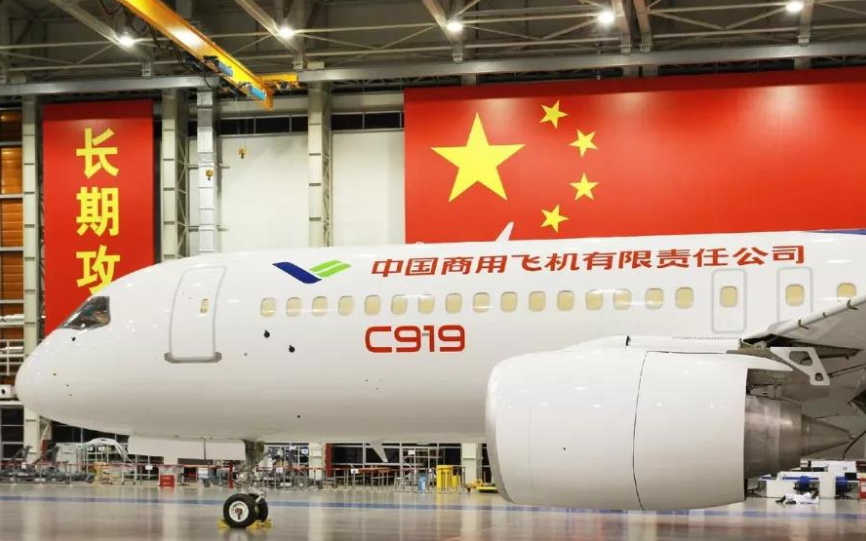
At the 4th China International Import Expo held recently, Shanghai Aircraft Manufacturing Co., Ltd. signed a letter of intent with high-tech and manufacturing enterprise Honeywell, which will provide corresponding products and solutions in conjunction with Shanghai Aircraft Corporation's 2022 C919 and ARJ21 aircraft production plan. This means that the domestically produced large aircraft C919 is about to enter the stage of mass production and delivery.
The dream of several generations of Chinese people to sit on their own country's big plane is already within reach.
Looking back on the journey of aviation serving the country, from small and medium-sized aircraft engines to landing gear, and then to key core technologies in the field of aircraft wheel braking, Hunan, this red hot land, has written a magnificent picture. Among them, Hunan Xingxiang Group has formed an alliance with Central South University, deeply integrating industry, academia, research and application, and is writing and continuing a new chapter in the path of aerospace technology research and building an innovative system. As the incubation platform for the transformation of scientific and technological achievements at Central South University, Powder Metallurgy Engineering Research Center Co., Ltd. (hereinafter referred to as the "Powder Metallurgy Center") carries the mission of solving and serving major national strategic needs and closely connecting industrial development. It has incubated a number of companies such as Boyun New Materials, Yingjie High tech, Boyun Oriental, Takeoff Company, and Boyun Braking. According to the deployment of the Central Committee of the Communist Party of China and the State Council to deepen the reform of the enterprise system under higher education institutions, the integration of university enterprises into the unified supervision of state-owned assets has become the direction of reform. In 2018, Hunan Xingxiang Investment Holding Group increased its capital and expanded its shares in the Powder Metallurgy Center, becoming the controlling shareholder and leveraging the power of state-owned capital operation platforms to promote and accelerate the transformation of scientific research and technological achievements in universities, as well as the cultivation of strategic emerging industry clusters. Recently, State owned Xiaoxiang entered the powder metallurgy center located in Changsha High tech Zone, and the Boyun New Materials aircraft wheel brake parts workshop is producing at full capacity. More than forty years ago, our country encountered a bottleneck blockade in the field of aviation braking, which was gradually overcome by the people of Hunan on a great journey.
Localization research and development
From solving the bottleneck problem to mass exporting
Sliding, taking off... landing, taxiing, stopping steadily, don't underestimate the brake pads. They are one of the most critical components for aircraft to achieve braking and ensure safe flight, and their status is not inferior to that of aircraft engines. Feng Zhirong, Vice President of Boyun New Materials, told Guozi Xiaoxiang Rongmei that aircraft brake pads (also known as brake discs) are vulnerable products. Based on 2500 takeoffs and landings per year, large passenger planes need to replace brake pads on average once a year.
For decades, China's large aircraft have been mainly imported, such as Boeing from the United States and Airbus from Europe. Little known is that some aircraft parts, including brake pads, were once subject to human control. In the 1970s, the main aircraft model of China's civil aviation was the "Trident" aircraft imported from the UK. However, due to changes in the international situation, the supply of parts for Chinese aircraft has been cut off, and brake pads are facing a bottleneck.
During the lifecycle of an aircraft, brake pads need to be replaced multiple times. Relying on imports, the supply is tight, and the price is high. The country not only has to spend a lot of money, but more importantly, without brake pads, the aircraft cannot take off. In order to ensure normal operation, sometimes we have to 'dismantle the east wall and make up for the west wall' - we have to remove parts from other aircraft to rescue planes that are in urgent need of repair, "said Feng Zhirong.
In 1975, in accordance with the instructions of the National Development and Reform Commission on "Based on Domestic Solutions to the Problem of Imported Aircraft Brake Devices for Civil Aviation", with the cooperation of relevant units such as the Civil Aviation Administration of China, the Ministry of Metallurgy, and the Ministry of Aviation Industry, the Powder Metallurgy Research Institute of Central South University of Mining and Metallurgy was responsible for the research and development of Trident aircraft brake materials. Overcoming numerous difficulties, in August 1977, the 252 Trident aircraft equipped with domestically produced brakes underwent test flight verification at Guangzhou Baiyun Airport and received high praise. In 1979, the Powder Metallurgy Research Institute of Central South University of Mining and Metallurgy became the first designated production unit for large Trident aircraft brake pairs (one of the components in the brake device) in China. After eight years, in May 1983, the entire set of brake materials passed technical appraisal and were mass-produced, completely solving the "neck sticking" problem of Trident aircraft brake materials.
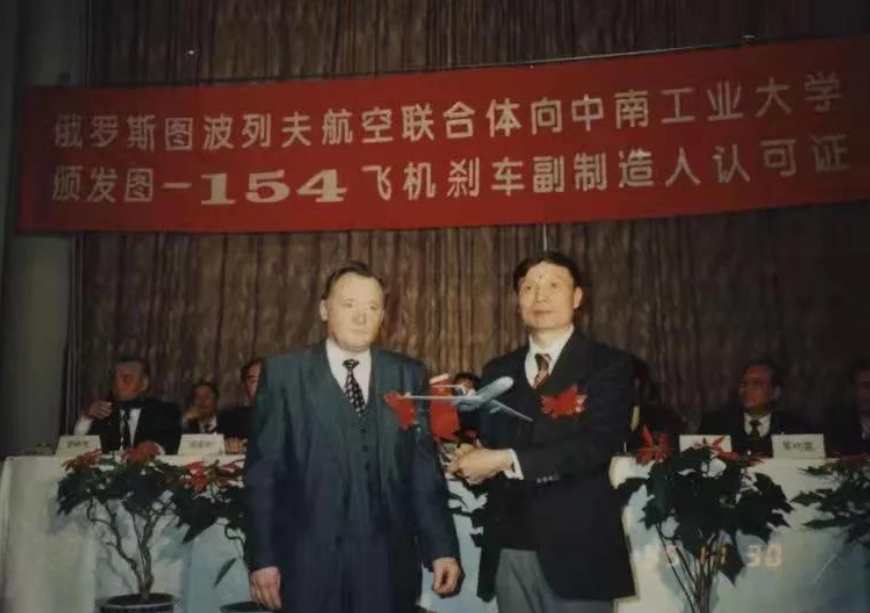
Riding on the east wind of reform and opening up, a large number of Tu-154 aircraft and some McDonnell Douglas and Boeing aircraft were introduced to China. In 1988, Huang Boyun returned to China from studying in the United States and took charge of the Powder Metallurgy Research Institute at Central South University of Technology. He led the team to overcome technical difficulties such as "poor stability" and "poor wear resistance under heavy loads" in traditional powder metallurgy friction materials. Subsequently, the high-performance powder metallurgy aircraft brake materials developed by the research institute provided key components for the Tu-154 series of aircraft, obtained China's first aircraft parts manufacturing license issued by a foreign country, and exported in bulk to foreign countries.
Continued New Chapter on "Charcoal" Materials
Deeply cultivating for 20 years to help domestic large aircraft 'land'
A generation of brake materials, a generation of airplanes. The advancement of technology and the rapid development of the aviation industry have put forward higher requirements for brake materials, and powder metallurgy brake materials have undergone iteration. Carbon/charcoal brake materials have gradually become the mainstream of aircraft brake pads due to their advantages of light weight, wear resistance, and high temperature resistance, and are known as the "black gold". But at that time, the technology was monopolized by Britain, France, and the United States, and strict technological blockades were implemented. China had to spend hundreds of millions of yuan every year to import carbon/carbon brake pairs.
In the early 1990s, China initiated research on carbon brake discs for civil aircraft, with research institutes and enterprises including Central South University, Aerospace 43 Institute, Aviation 621 Institute, Huaxing Aircraft Wheel Company, Yantai Metallurgical New Materials Institute, etc. taking on the responsibility of national aerospace safety. Prior to this, China conducted research on the application of carbon/carbon brake materials in the field of military aircraft, but due to immature technology and other reasons, mass application has not been achieved. Central South University has accumulated experience in the research and development of brake materials for civil aviation aircraft in the field of steel brake discs, and has also been conducting research and development of carbon/charcoal brake materials, achieving good results, "said Huang Boyun. As a result, Central South University, led by Huang Boyun, formed a team of more than 60 people from disciplines such as materials, chemistry, mechanics, electronics, and aviation to jointly tackle the problem. I can't remember how many experiments and how many overnight stays were conducted. In 1996, the team completed the basic research on high-performance carbon/carbon composite aviation brake materials and began to leave the laboratory for industrial experiments. State owned Xiaoxiang Integrated Media reporters saw in the factory of Boyun New Materials that one by one "secret" large furnaces were burning, which is the production scene of carbon/carbon brake discs. Due to the prohibition of exporting key equipment (foreign) for production, most of them can only be designed by themselves, commissioned to other domestic manufacturers for processing, or even processed by themselves, "Feng Zhirong admitted.
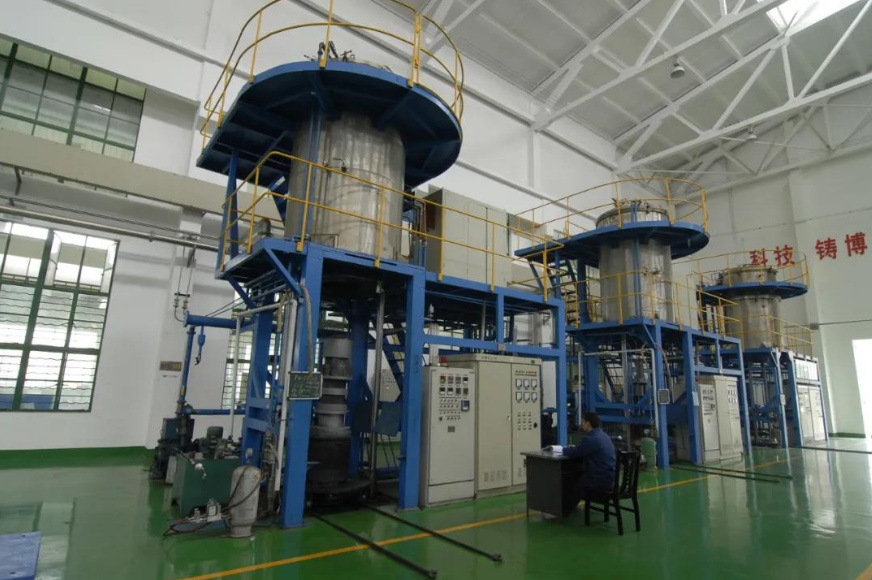
The workshop of Boyun New Materials for producing aircraft brake discs. Respondent provided pictures
As an engineering research and test base for scientific research achievements, the National Engineering Research Center for Powder Metallurgy of Central South University formally undertook the "National Industrial Test Project for Carbon/Carbon Composites" in 1998, and began to tackle key technical problems in engineering.
During the development process, we had to constantly go to the ground inertial station in Guilin, Guangxi to conduct simulation experiments. From normal braking and overload, to hot and wet states, to response frequency, abort takeoff, etc., more than 20 indicators needed to be passed one by one, "Feng Zhirong recalled. In the experiment in September 2000, the brake pads rapidly heated up, the friction coefficient suddenly decreased, and the experiment failed. That also became the darkest and most agonizing period for Huang Boyun and his team. After enduring immense pressure, conducting experiments repeatedly, conducting inspections one by one, and making gradual improvements... One year later, a complete set of high-performance carbon/carbon aviation brake materials with independent intellectual property rights has been developed!
Huang Weiming, the deputy general manager of Changsha Xinhang Aircraft Wheel Brake Co., Ltd., a wholly-owned subsidiary of Boyun New Materials, worked for many years at the 609th Research Institute of AVIC and participated in some related work. He recalled, "The strength of Central South University is friction materials, while the strength of the 609th Institute is structural design. Therefore, in the year 2000, the two companies joined forces to carry out the localization of carbon brake discs, which also opened up research on the application of carbon/carbon brake materials in military aircraft
In January 2003, Boyun New Materials was installed for trial use. In November, it became the first domestic enterprise to obtain the PMA certificate (parts manufacturer approval certificate) for the carbon brake pair of Boeing 757 aircraft. As a result, China became the fourth country after Britain, France, and the United States to possess the production technology of aviation brake materials.
At the beginning of 2005, this technology won the first prize of the the State Technological Innovation Award, reaching the international advanced level. The research on this material has gone through a long process, almost 20 years, and there were also many technical preparations ahead, "Huang Boyun introduced.
Based on the core technology of carbon/carbon composite materials, Huang Boyun led a team to develop a high-performance aircraft wheel and brake system, which provides a complete set of brake components for China's C919, imported Boeing, Airbus and other large aircraft and advanced fighter jets, and key high-temperature components for the power system of aerospace equipment, ensuring the strategic safety of national aerospace.
The C919 carries the Chinese people's dream of a big airplane. COMAC is not only the main implementer of China's medium and large passenger aircraft projects, but also the main carrier for coordinating the development of mainline and regional aircraft and realizing the industrialization of China's civil aircraft. In 2008, when the C919 aircraft project was launched, a subsidiary of the Powder Metallurgy Center formed a joint venture with Honeywell in the United States to provide wheel brake systems for the C919 aircraft. From the delivery of the first set of carbon brakes in July 2015 to November 2020, more than 100 sets of products have been delivered, ensuring the development progress of the C919 aircraft.
Since the development of this technology, international civil carbon/charcoal materials have been reduced by 50%, saving tens of millions of dollars in import costs for China every year and greatly reducing the operating costs of airlines.
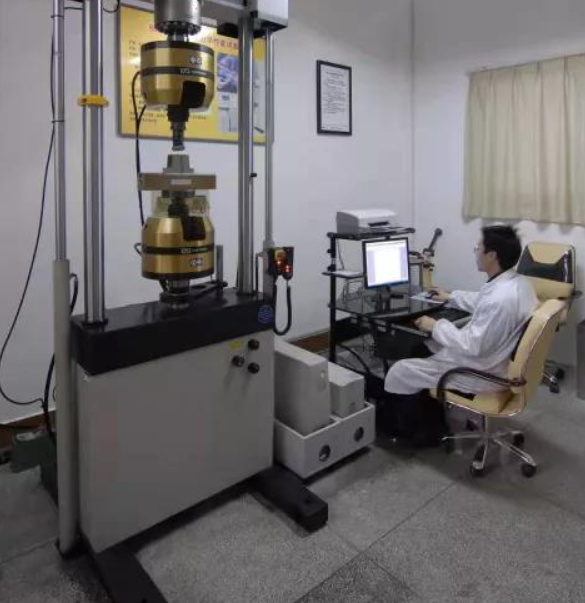
Research and development of mechanical testing for carbon/carbon brake materials. Respondent provided pictures
Parade Exhibition Style
Establishing a world-class experimental base in Hunan
At the moment when the plane flew over Tiananmen Square for inspection in just a few seconds, my eyes and those of our team were moist. National Day is a special day, and it holds great significance for Huang Weiming, Luo Zhen, and their team. Especially two years ago, Hunan's independently developed wheel brakes and control system were integrated to escort transport planes and trainer planes into the sky, preparing for the 70th anniversary of the founding of the People's Republic of China and the National Day parade. Pride, pride, glory, pressure, hardship, and other emotions were intertwined, and they are still vividly remembered today.
The period from June to September 2019 was a 100 day military parade training guarantee, and Huang Weiming and his team's nerves were always tense. Every morning before 6 o'clock, go to a certain airport of the Northern Theater Command Air Force. From the aircraft system accessories to the wheel brakes, you need to 'look, touch, listen, smell' everything in place and prepare for the pre flight maintenance. After each takeoff and landing, you need to provide technical answers to the pilot and conduct a comprehensive system inspection of the aircraft again. During this period, you will be on standby 24/7 to troubleshoot and ensure a smooth return and return to construction. "This is the daily work of Luo Zhen, a pioneer party member of Xinhang Company, as a military parade support service personnel. Due to the high temperature, there was a cylinder seat oil leakage during the flight training period, "Luo Zhen recalled. The weather forecast at that time was over 30 degrees Celsius, and the airport runway was about 60 degrees Celsius. He plunged his head into the bottom of the landing gear compartment and lay down for several hours. Although I am the only one in the on-site support team, my colleagues who are on standby in Changsha are my strong support. The front and rear teams cooperated with excellent skills and tacit understanding to quickly achieve zero faults
On October 1, 2019, the 70th anniversary of the founding of the People's Republic of China, relying on the preparation technology of high-performance carbon/carbon aviation brake materials from Central South University, four advanced transport planes and three advanced training planes loaded with Changsha Xinhang aircraft wheel brakes and control systems successfully took off and flew over Tiananmen Square in no time, accepting the inspection of General Secretary Xi Jinping and the people of the whole country, proving to the world the strength of Chinese manufacturing.
The military parade was met with thunderous applause. Behind the scenes, Luo Zhen and all the security personnel embraced each other in sweat and tears... This is one of the most beautiful memories of their lives.